
Welcome to WILDCOMS, a collaborative network formed between various UK surveillance schemes that monitor disease and contaminants in vertebrate wildlife and aims to:
- provide a focal point for disease and contaminant monitoring in wild vertebrates
- provide an integrated overview of the health status of UK wild vertebrates
- facilitate collaboration between WILDCOMS network partners
- facilitate identification of disease and contaminants of emerging concern
The latest quarterly WILDCOMS newsletter can be found in our Newsletters
Information about the individual surveillance schemes in the WILDCOMS network can be found in Schemes. Dead birds and mammals are of interest to:
- Dead bird of prey? Predatory Bird Monitoring Scheme
- Suspected poisoned wildlife? Wildlife Incident Investigation Scheme England and Wildlife Incident Investigation Scheme Scotland
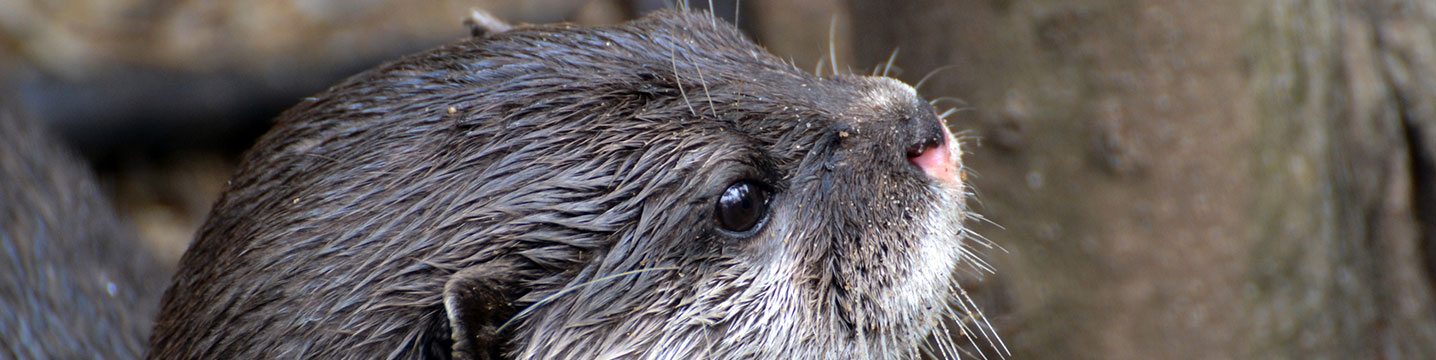
- Dead otter? Cardiff University Otter Project
- Stranded marine mammal? UK Cetacean Strandings Investigation Programme
- Sick or dead wildlife in your garden? Garden Wildlife Health
WILDCOMS was established through a Knowledge Exchange grant from the Natural Environment Research Council (NERC). For further information or to join the mailing list for our newsletters please email WILDCOMS.
Why monitor wildlife?
Disease and contaminants pose major risks to wildlife and human populations. Although disease is a natural driver regulating the dynamics of wildlife populations, some diseases warrant particular attention because they:
- cause major mortalities that lead to population crashes of affected species and their predators, (e.g. myxamotosis in rabbits)
- threaten wildlife species of high conservation concern (e.g. squirrelpox virus in red squirrels)
- pose a potential threat to Man (e.g. rabies, avian influenza).
The risk that environmental contaminants can pose to wildlife populations has been repeatedly demonstrated, classic examples being the impact of organochlorine pesticides on predatory birds and mammals from which populations are still only recovering. Assessment of the risks posed by disease and contaminants to wild vertebrates (and through them to Man) typically involves monitoring occurrence and severity in key organisms.
Various monitoring schemes have been developed in the UK. They fall roughly into two categories:
- disease or contaminant-specific monitoring that is often focussed on a single disease/contaminant and sometimes a single species (e.g. TB in badgers (Meles meles))
- surveillance of one or more sentinel species, usually for multiple diseases and/or contaminants.
